Building a Shared Vision for the Advisor Experience
Led four designers over three months in developing a future-state vision for Northwestern Mutual’s advisor platform, bringing together disconnected tools, workflows, and user needs into a more cohesive experience.
The challenge
A platform built one product at a time
At the start of 2023, Northwestern Mutual’s financial advisors relied on more than 60 digital tools to manage clients, run their businesses, and complete everyday work. Over time, these tools had evolved independently, creating an increasingly fragmented experience.
As the organization began planning its next generation of advisor technology, we needed a clearer picture of how these experiences should work together in a single hub for advisors and their staff.
As part of the Field Experience Design team, I led four designers in developing a future-state experience Blueprint. The goal wasn’t to redesign every application or produce a development-ready specification. We needed to make the future tangible enough for stakeholders to evaluate, discuss, and use in planning.
The central challenge was balancing independent exploration with a unified product direction. Each designer needed room to investigate different advisor needs, but the result had to feel like one platform rather than four separate concepts.
Organizing the exploration
Starting with the advisor, not the application
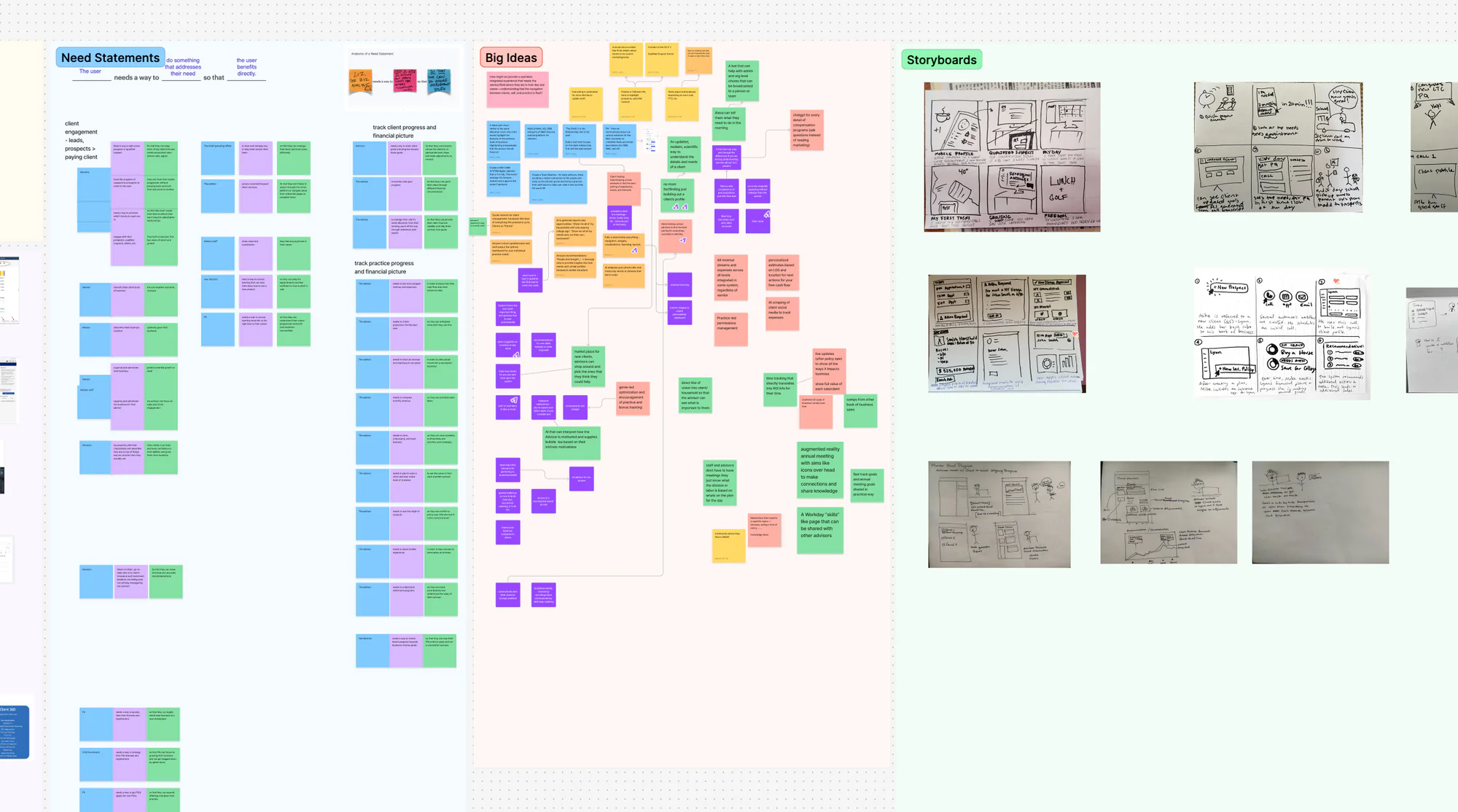
One of the challenges with a platform this large is that it’s easy to organize the conversation around existing products. But advisors don’t experience their work as a collection of product roadmaps. They’re trying to build careers, serve clients, grow businesses, and support teams.
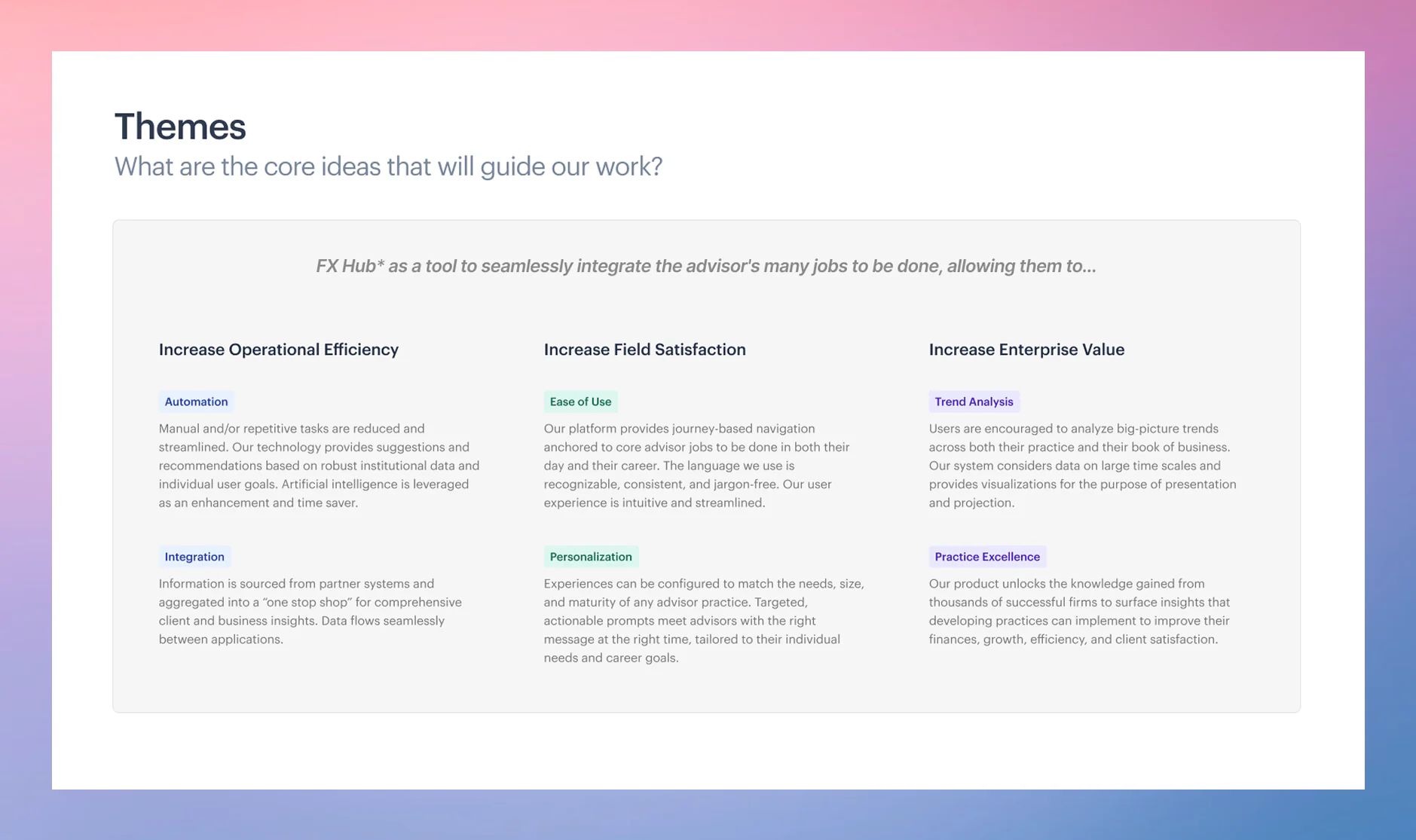
We structured the Blueprint around four narratives informed by enterprise strategy, user research, and conversations with advisors and field leaders.
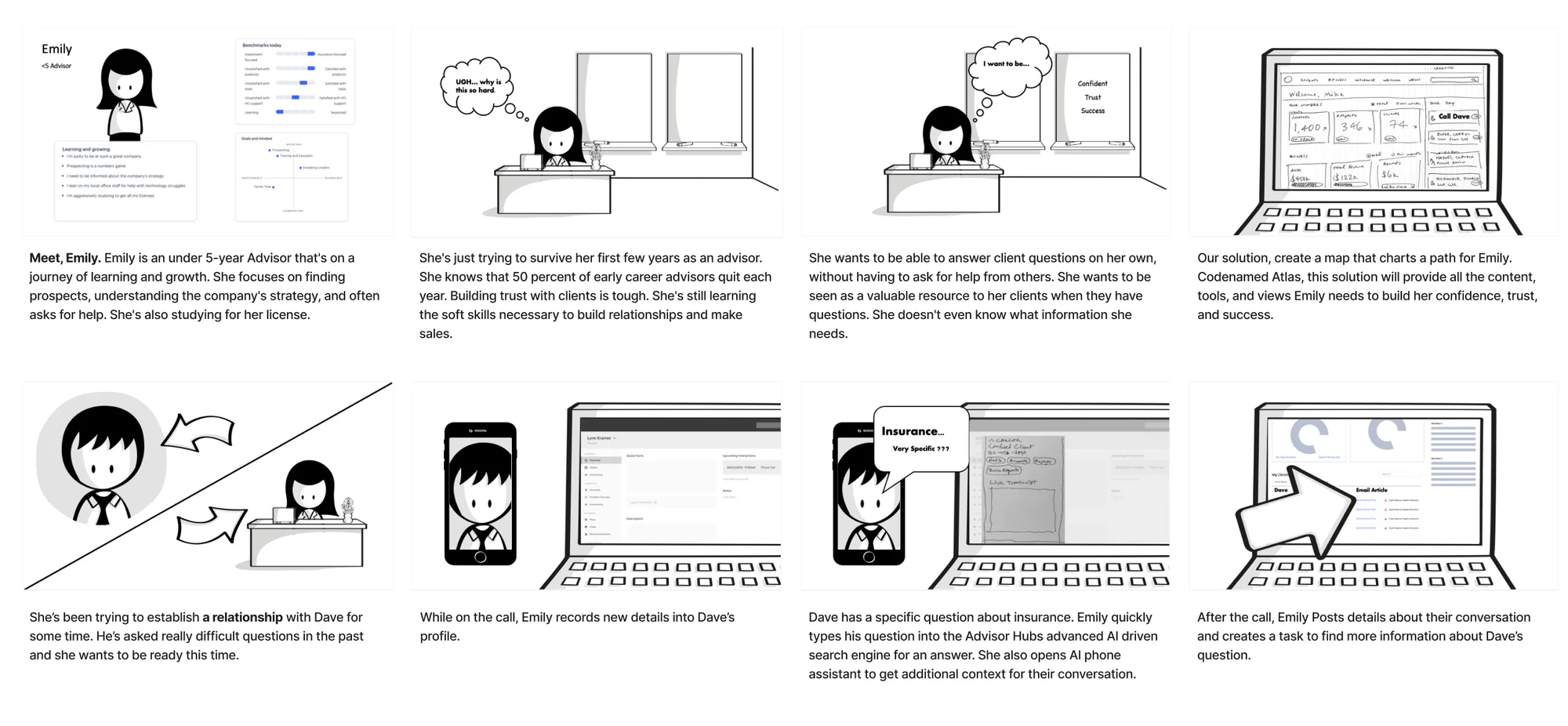
Emily — Grow My Career
An early-career financial representative developing the skills and relationships to succeed.
Ian — Strengthen Client Relationships
An established advisor looking to anticipate client needs and deliver more integrated advice.
José — Scale My Business
A business owner balancing client service, practice performance, and growth.
Charlotte — Lead My Team
A field leader focused on developing advisors and supporting her organization.
Each designer developed one narrative, exploring how the future platform could support that person’s work. This gave the team a way to investigate different needs without being constrained by existing product boundaries.
It also revealed where the narratives depended on the same information, capabilities, and workflows.
Creating a coherent platform
Connecting the work across experiences
As the narratives developed, we identified five areas that needed to work together: practice management, book management, client and household management, task management and workflows, and a personalized landing page.
These weren’t intended to become five entirely new applications. They provided a shared model for connecting information and workflows across the platform.
An opportunity identified while reviewing a book of business, for example, should remain connected to the relevant client profile and the actions needed to follow up. Tasks should be accessible across the platform rather than confined to the application where they originated.
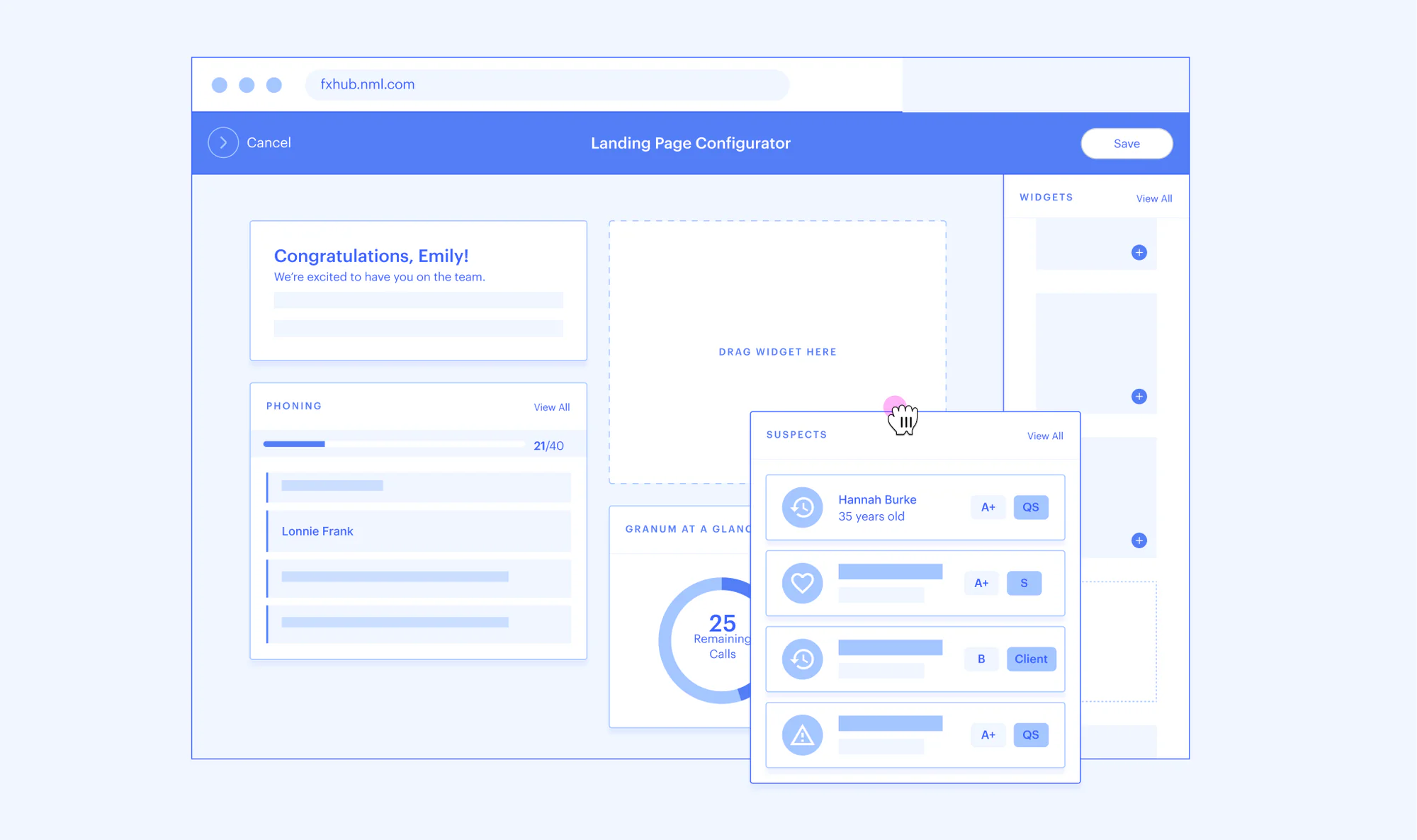
The design challenge was determining which patterns should remain consistent across the experience while allowing individual workflows to support different kinds of work. The landing page, in particular, proved a highly contested area: multiple stakeholders felt certain user segments deserved dedicated widgets for specific work, and there was debate over which segments to prioritize. Rather than prioritize one segment, we landed on a customizable landing page that could adapt to different advisor needs while remaining consistent in structure and interaction patterns.
Establishing a shared design language
With four designers developing different parts of the experience alongside their existing responsibilities, we needed a way to work quickly without allowing the concepts to drift apart.
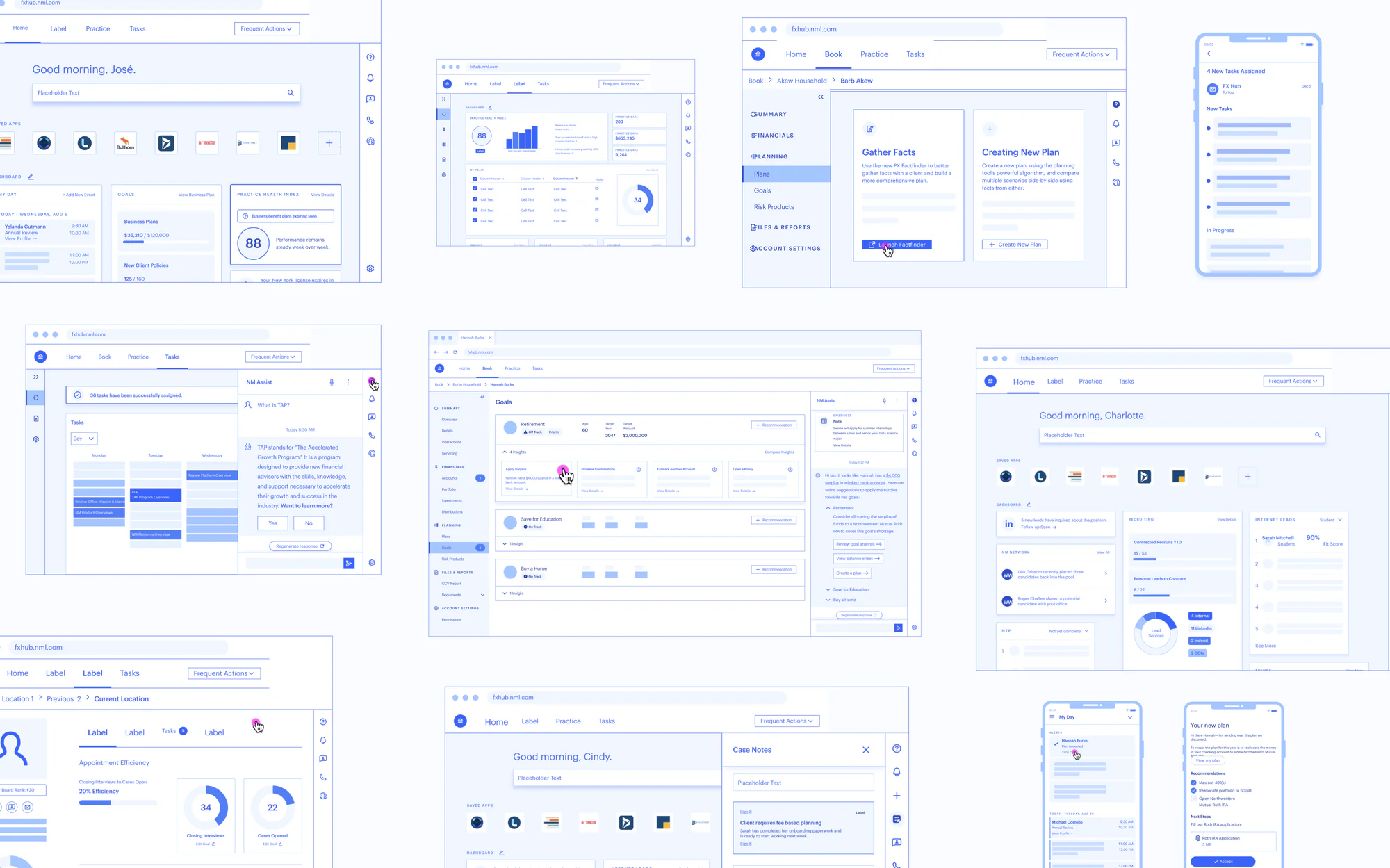
We created a lightweight design system for the Blueprint, establishing shared components, navigation patterns, and visual conventions.
We deliberately kept the interfaces at a wireframe-like level of fidelity. We wanted stakeholders to focus on workflows, information architecture, and product direction rather than interpret the concepts as finalized UI.
The system also gave designers a common foundation. They could reuse patterns, compare approaches, and spend more time exploring the problems specific to their narratives.
Bringing the vision together
Four narratives with a unifying direction
Developing the individual narratives was only part of the challenge. My primary responsibility was bringing them together.
Each designer had developed ideas within their own story. Some concepts overlapped, while others approached similar problems differently.
Through collaborative workshops, we reviewed the narratives, compared interaction patterns, and worked through competing ideas. My role was to help the team determine where the experience needed consistency, where different workflows justified different approaches, and how the concepts could reinforce one another.
I also developed the structure of the final Blueprint presentation, weaving the four narratives into a connected story that stakeholders could follow.
Connecting information, decisions, and action
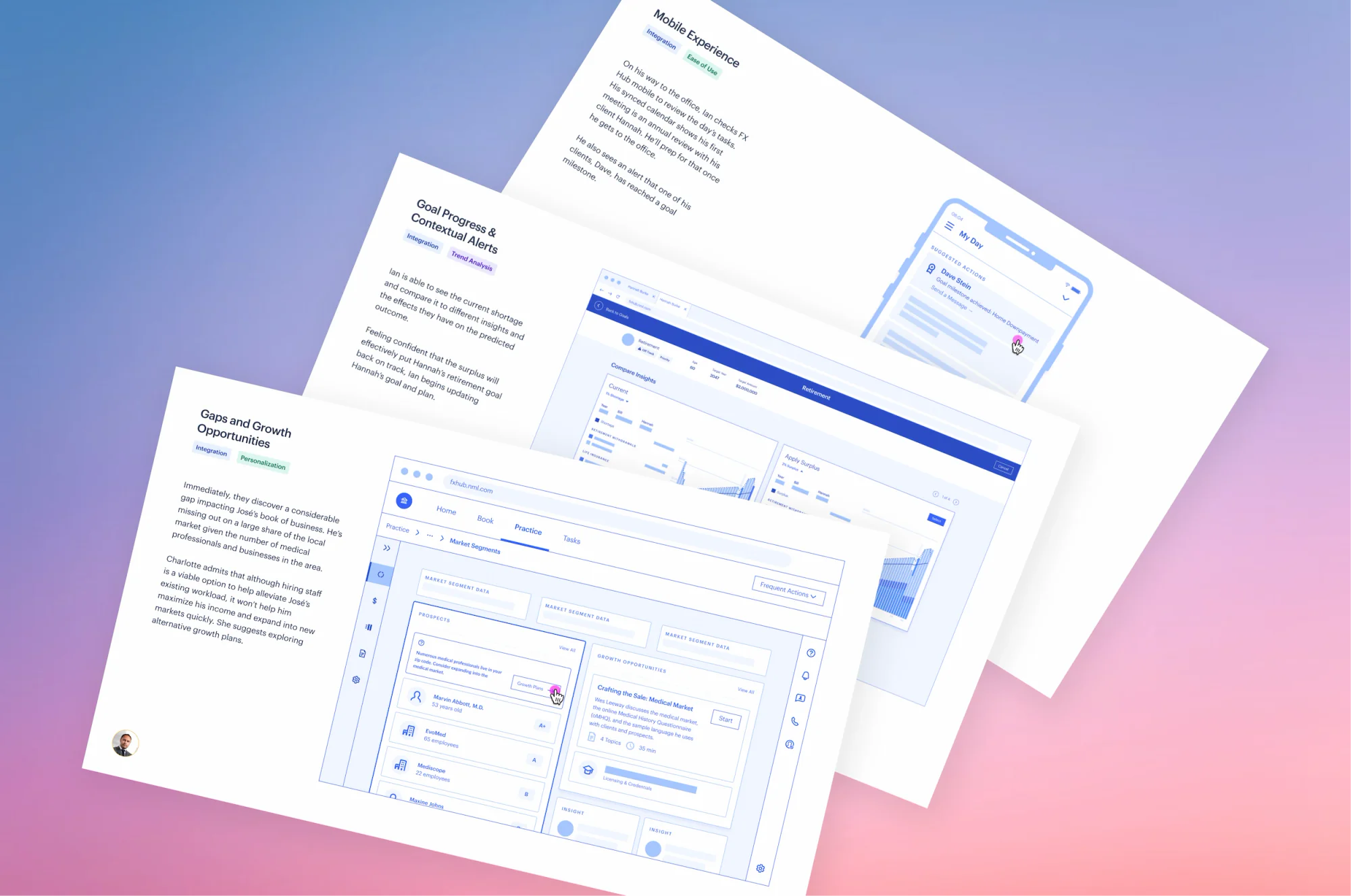
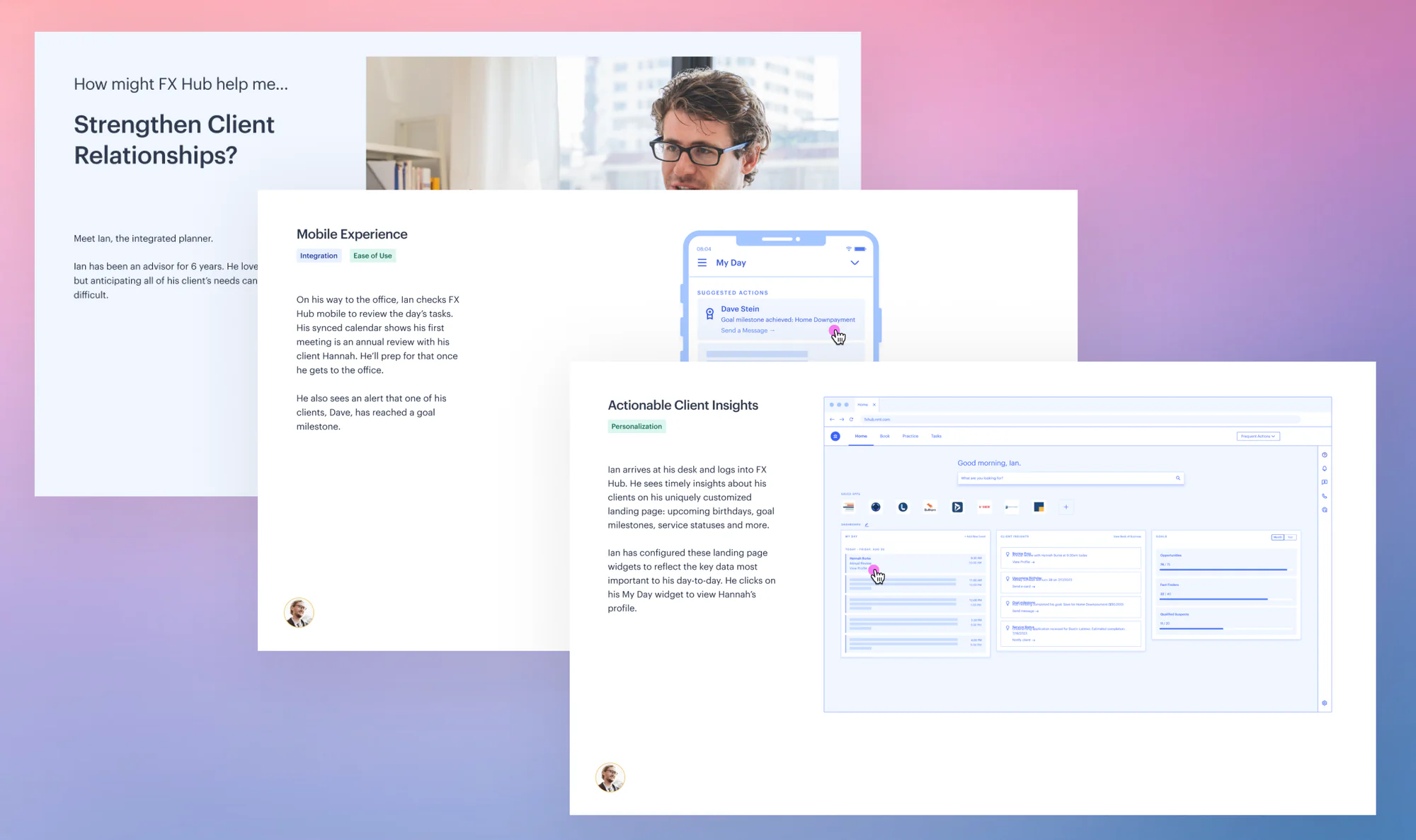
Ian’s narrative provides one example of the direction we were exploring.
His day begins on mobile, where he reviews upcoming meetings and client activity. As he prepares for a conversation, he moves into a more detailed desktop experience with access to client information, financial goals, and planning insights. Those insights can lead to recommendations, follow-up activities, and ongoing client work.
The individual screens represent different capabilities, but the experience is intended to feel continuous. An advisor shouldn’t have to repeatedly reconstruct context as they move between understanding a client’s situation, deciding what to recommend, and taking action. Rather than treating client information, recommendations, and follow-up activities as separate destinations, we explored how they could remain connected through shared client context and consistent navigation.
This idea extended across the Blueprint. José’s narrative explored how practice analytics could support business decisions, while Charlotte’s focused on team performance and advisor development.
Feedback from advisors and stakeholders also led us to expand the scenarios involving support staff, shared tasks, and coordinated workflows. This reinforced an important principle: a connected experience needs to account for how work moves between people, not just applications.
From vision to product direction
Giving teams something to build toward
The final Blueprint brought the experience together in a 73-page document, combining advisor narratives, product concepts, and proposed workflows into a shared picture of the platform’s future.
It wasn’t intended to prescribe every interaction. Its value was giving Product, Design, Engineering, and business stakeholders something concrete to react to and plan against.
Several directions established in the Blueprint subsequently became part of the product experience:
- A more consistent navigation model. The left-hand navigation approach was rolled out across platforms and applications over the following two years.
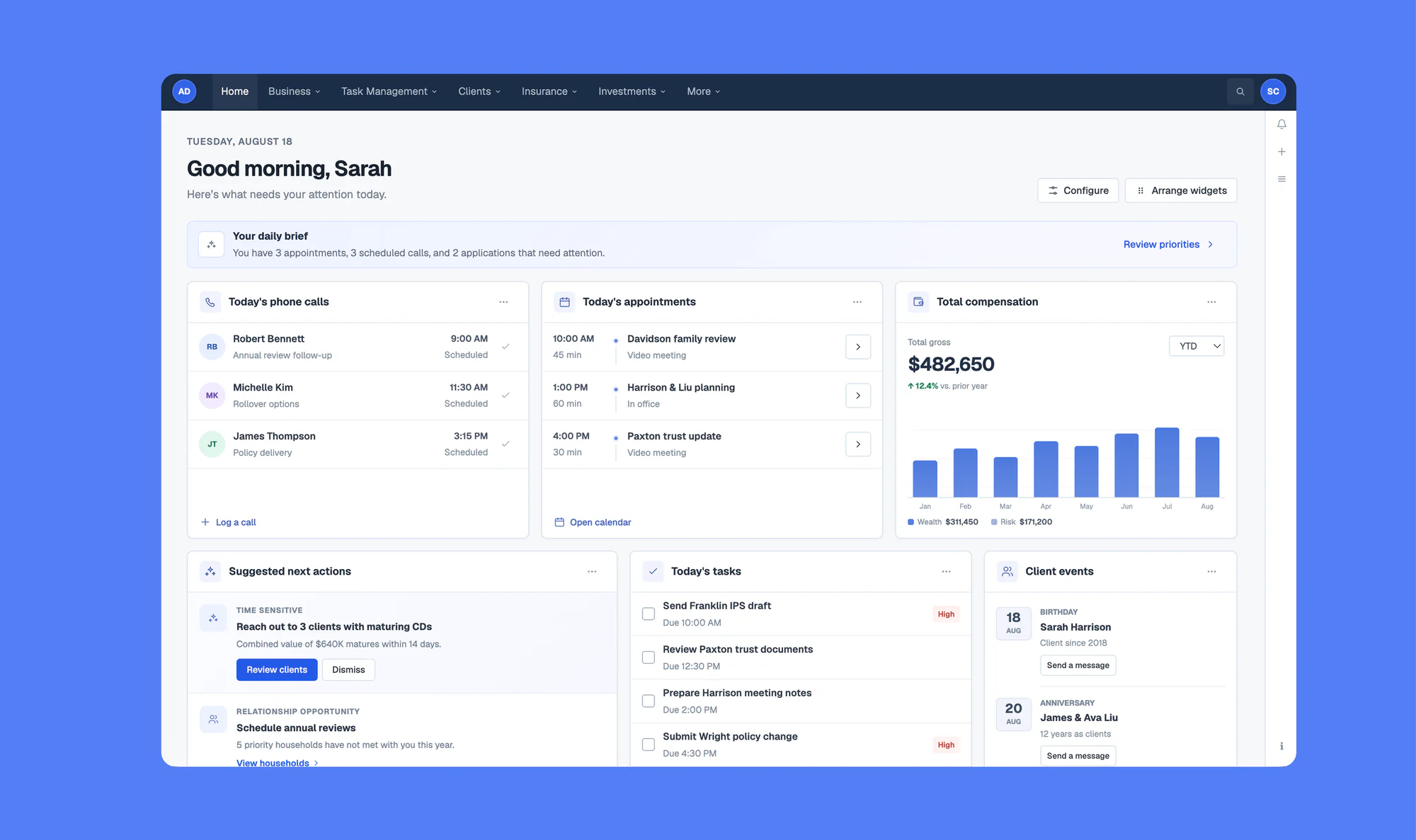
- A new landing page. The proposed landing-page experience received funding and was developed into a product.
- A clearer home for task management. Task management became a dedicated destination in the platform’s global navigation.
These weren’t implementations of the Blueprint in its entirety. They were examples of how a shared future-state direction could inform individual product investments over time.
Looking back
One of the most challenging parts of this project was maintaining coherence while allowing four designers to explore different problems. Too much standardization would have constrained the work, but too little would have produced four separate visions. The lightweight design system, collaborative workshops, and shared narrative structure helped us find a workable balance.
This was a new approach to vision work at Northwestern Mutual, and one that proved valuable. By leading sprints of future-state exploration and narrative development, Design helped stakeholders connect advisor needs with the product and engineering decisions required to support them. Just as importantly, our biweekly reviews with cross-functional partners kept the Blueprint from becoming a vision owned by one function alone. It became a shared artifact that teams could contribute to and use to make decisions together.
In the future I would put more emphasis on how a vision like this could be maintained after funding and rollout were established. Establishing a shared direction is one challenge; preserving that coherence as individual teams make delivery decisions is another.
Two years later, the Blueprint continues to be referenced as Northwestern Mutual invests in new capabilities and evolves the advisor experience. Its lasting value wasn’t any single concept, but giving teams a shared direction to build toward.